Sunday, December 4, 2011

The Jazz Jobber

Hello,
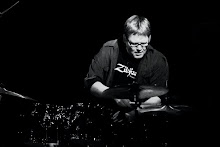
I just had a very positive experience playing what's known around these parts as a Jazz Jobber. A "Jobber' or "Jobbing Gig" would be defined as any engagement where you're playing ambient music for an event. Around Montreal they call these gigs "Club Dates".

As I mentioned, I has a great time at the gig last night. The clients (it was a wedding) did everything right. They were very relaxed, they trusted us to do our thing and let us do it, they fed us, etc. etc. They couldn't have been nicer or easier to deal with. Now certainly, every gig of this type isn't always this easy or fun, but there's also a lot we as musicians can do to make it go smoothly. I'm also going to point out some common errors I feel people make in this type of gig environment.

1. Remember your purpose for being there.
Pretty well everything else I mention could fit under this main category. Whatever the even you're playing, be it wedding, fashion show, etc. You are not the centre 0f attention. Just as whoever does the floral arrangement, makes the meal, etc. Keep this in mind and you'll be a lot less frustrated and better fulfill your job.

2. Make sure your payment is in line with the gig.
This is also a way to keep yourself from being frustrated. These sort of jobs where you're not being paid close attention to should pay more than when you're playing for a strictly listening crowd. As soon as I'm in a situation where I absolutely have to wear a suit and I'm playing an event hall or a synagogue rather than a club, I generally expect to be paid more.

3. Leave your new symphonic work at home.
Okay, I'm being a bit facetious, but it's unbelievable how many times I've played an event and someone wants to play all original music. This is not why you're there! In the case of a "Jazz Jobber" this is a chance to polish up your "Great American Songbook" repertoire. By that I mean, tunes by Gershwin, Cole Porter, and the like and they should be memorized! I sometimes play with someone who has a book of original tunes and we played an event where the power stayed on but the lights went out. Since this person didn't know any standard tunes, we were stuck until we had light again. In a more experienced band the conversation might have went something like, "Do you know It had to be you?" " Sure, what key?" " I dunno, F?" "Sure". I often tell bands I coach that a lot of what I call "Broadway Standards" can function on Jazz gigs and Jobbers.

4. You will be ignored. Revel in it!
I also was in a situation where the bandleader was miffed that people at the wedding weren't clapping for our solos! This floored me! At a lot of these events people are experiencing life changing events and are seeing friends and family that they may have not seen in years. It doesn't matter if you're playing bass or we had a seance and brought back Paul Chambers. They have other concerns besides your hot solo!!! I've mentioned this before but the "flying under the radar" quality of these gigs actually offers a lot of freedom in a way. As long as you're playing standards you can can go for it within those confines as long as you.....

5. Don't play too loud.
This is essential. if people can't visit while you're playing, they won't be happy and you won't get hired again. For us drummers this is great for working on brushes or playing delicately with sticks. View it as a fun challenge and get your low volume chops together!

Alright, now put on your suit, be prepared to eat some good food, play soft, hang with your musician friends and play some standards. Not a bad way to make some $, is it?

Thursday, December 1, 2011

Taste

Greetings earthlings!

Today I'd like to chat a little about taste in music. Taste is something that takes a while to develop but like everything else, there are ways to work on it and hasten it's progress.
I like to think of taste as a combination of maturity, experience, and good judgement. Now some may ask, how do I work on experience if I've hardly played any gigs yet? Good question. Getting experience working professionally is invaluable , and there's no substitute for that. Experience listening, however, is something we can all work on every day, regardless of where we are in our professional drumming lives. When you listen to something, try to figure out why the drummer (or whatever instrument you're concentrating on) played what he/she played rather than worrying so much about what they played. What is the context in which they're performing. A lot of things people play in the moment don't look like much outside the context they were played in. That's why sometimes a transcription of a drum part alone doesn't really tell the whole story. That's also why there are a lot of great drum soloists that don't necessarily sound good with a band. If you hear stuff that sounds to your ears as inappropriate, try to figure out the why of that as well.

I recently had a young player express frustration to me because a bass player and I told him two completely opposite things when critiquing a performance of his. I remember experiencing the same thing myself when in school. The thing is, I'm sure we both had a point. The problem is often less experienced players only do certain things halfway, or think they're doing something when they aren't. (I remember one time Dave Holland quite severely taking me to task on the later point, and he was absolutely right.) As a young musician try to avoid rigid thinking such as "A ballad always has to go to double X feel in the solos." or "You should always switch to brushes for a bass solo." Both statements are good general concepts that will work well a lot of the time, but they're not absolutes. Nothing in music is. Also, strong, mature playing will sustain many different concepts. That's why 2 great players can play completely opposite things on a performance and they both will work. In fact, in the hands of a very strong player, they convince you that their way is the only way to play it! When I heard Victor Lewis play recently, he played things that were almost audacious, (and I mean that in a very positive way, the man is fearless!) yet they always worked and sounded beautiful. In less mature and experienced hands the same material would have been a disaster!

Try to think of listening as a flight simulator for your ears. Your not actually flying the plane, but you're getting valuable information for when you do actually take the controls. Playing along with recordings would also fit in with this concept.

Finally, keep in mind taste is something that you can work on, but you will also acquire with time, just from living your life and learning more about the world. When I was younger, I wouldn't say I played with bad taste as much as no taste. I would play things for the wrong reason, trying to justify things I had worked on rather than focusing on dynamic range and groove, for example. In fact, if there was some sort of award for "most inappropriate drumming in a show band context", my work with Saskatchewan Express in the early 80s would certainly be a contender. I apologize Vern and Carol, I was young and stupid!

Here's some great and tasteful drumming from Nashville great Buddy Harman. Check out how he maneuvers that little four stroke ruff throughout the bar. Very thematic. Mr. Harman also created other iconic drum parts on tunes such as Roy Orbison's "Pretty Woman" as well.


Thanks!


Wednesday, November 30, 2011

Programming note

Well, November was a personal best in terms of quantity of posts but for the next little while the posts will slow down a bit and probably be a little less drum specific as I have a couple of gigs on piano and I really want to sound like I remotely have a clue, so .....I'd better get shedding.

The other day I did find a great post on the Cruise Ship Drummer blog on bass drum variations for Bossa Nova. You can check it out there. Thanks to Todd Bishop for this (and other material too) on his great blog.

Also here's more of Paul Motian's great trio playing Monk's "Misterioso".


The feel they get is like no one else! Also check out the new Lee Konitz "Live at Birdland" recording. Beautiful.

Tuesday, November 29, 2011

The price of tea in China....

Hello music world!
The title of this post is an expression I got from my Mother. When you are having a conversation with someone and they ask you "What does that have to do with the price of tea in China?" they mean, "What does what you said have to do with what we talking about?" I find this is often an appropriate expression in the drumming world, where it's often easy to get sucked into thinking and practicing things that might not be so important and ignoring things that are. I will also admit that some of the things I post here are rather esoteric. Wacky stuff on the drums is great, but it can never take place of certain "immutable principles" that I think we all have to have together before we work on anything else. Let's look at them, shall we?

1. A good sound on the instrument (this would include pleasing tuning, dynamic control throughout the drums and cymbals, consistent attack etc.)

2. Good feel and even time in whatever style we're playing.

3. Knowledge and mastery of whatever music we're playing. This includes knowledge of melodies, lyrics, basslines, chordal harmony, and most of all the FORM of a piece.

There's probably more of these so this is just a short, starting list. An example of me ignoring some of these immutable principles would be if I play some super clever thing I learned at a drum clinic but lose the form of the 32 bar tune I'm playing it on. That's not of much use, is it?

A good way to think about what to practice and how long to spend on it is to place anything you're working on in 1 of 3 sets of goals: immediate, maintenance , and long term.
I'll discuss then briefly now.

Immediate goals:
This would include anything that you have a short time to get together and is required of you for a gig, ensemble, or a lesson, in that order.
So if you got hired to play on a Patsy Cline tribute on a Tuesday and the gig's on a Friday, you'd better learn the tunes (and make cheat charts possibly too) before you do anything else. If you get together a brilliant Brazilian beat together but mess up on the gig, that's not a very good use of your time!

Maintenance and improvement goals:
This would roughly include any sort of work that will be of benefit to you in the near future but there isn't necessarily a deadline on. This is a bigger list and changes from individual to individual, but might include such things as rudiments and their applications, listening to and playing with records of various styles, learning tunes, different world grooves and styles, funk, brushes, reading, etc. A lot of this stuff might not be as glamorous as learning a tune from a Punk band that you love but no one else has ever heard of but you'll probably never play it in public so again, your practice time could be better spent.
Try to gear this list to your weak areas and things that you would be asked to do on a gig. A friend of mine told me a very funny story about a rather egotistical fusion drummer he knew who could play all sorts of drum stuff but sat in with a band playing the tune "Cute" and played time through all the drum breaks! Prioritize folks.

Long term goals:
This would include anything you want to do. It might include lifting your favorite prog rock song's drum part note for note, one handed rolls, double bass drum, etc. With this stuff, realize there will be a lot of times you play with people where you won't be able to use it and NEVER try to fit it in just because you've worked on it a lot and want to justify that. You are justifying that at the expense of the music, and that's way too high a price to pay! When I started working on odd groupings I'd say a good 2 years went by before I approached anything like playing any of that stuff in public. I also sometimes spent months ignoring it while I worked on things I had to know sooner. If you're going to play drums your whole life (and I certainly hope that you do) some things can wait a while.

I think in general, it's good to realize that all the crazy drum stuff will only mean something if you can play the gig. Gigs, for most of us mere mortals, means playing musically and appropriately with good sound and feel. There's a handful of people who travel the world playing solo at drum festivals but they're not going anywhere anytime soon!
A really good local example of a player who can make your mouth drop open but who never fails to play for the music is Paul DeLong. He has the musicality ( as well as good old career sustaining common sense) to pick and choose the spots where his virtuosity will have the most impact. I know he's sick of hearing how much I enjoy this performance of his, but here he is on Kim Mitchell's "All we are" playing the CRAP out of a 1/2 time 3/4 shuffle type groove, complete with cool bass drum placement, and great back end of the beat fills.


Thanks, and go practice something practical!

Monday, November 28, 2011

Ted's weekend of getting his butt kicked!

Hey everyone,
I meant to post this about a week ago, but....well it was a very strange week, to say the least.
Anyway, a week ago last Sunday I had the treat of seeing more high quality music in one day than I had had a chance to in years!

First, I got to see JPEC's latest concert presentation in Toronto. The Jazz Performance and Education Centre is committed to putting on concerts by world class jazz artists, In fact, I played one of their events with Seamus Blake last year. This event was Darren Sigesmund's band opening for Lionel Loueke's band. First Darren's band. They played all original music with a great mixture of textures and grooves. They had a very unusual fron line of Voice, Trombone, and Alto, which Darren's writing showed off beautifully. Great solos and wonderful music. Also worth noting is that although the regular drummer is Ethan Ardelli, (a great younger player that I've mentioned in past blogs) subbing in for him that night was Fabio Ragnelli .He played the music so beautifully. Please check out this talented, musical drummer when you have the chance.

Then the Loueke Trio played, and it was so great to hear them live after enjoying their recordings for so long. The three of them have such empathy, developed during 12 years of working together. Lionel Loueke deserves a lot of credit by sticking with Ferenc Nemeth and Massimo Biolcati in the early days when they weren't well known. I've talked about nemeth's drumming before and how much I love what he does, and he certainly didn't disappoint. He plays so sensitively, always the perfect thing at the right moment. A wonderful night of music.

I wasn't done though, I trundled over to the Rex where Sax player Ryan Oliver was finishing the last night of a 3 night run with Victor Lewis. I've been fortunate to have seen Mr. Lewis a few times over the years, but I don't think I've ever heard him play with as much authority and vitality. After recovering from a dislocated shoulder last year, he's playing better than ever!

This experience has also been very important for me to realize (again) the power of live music. I think many of us are lulled into think youtube or live feeds (great and handy as they are) are no substitute for being in a room with them and feeling them create. I am vowing to make checking out people live a priority from now on.

I had this pointed out to me on the weekend, it's long but do yourself a favour and check out this version of the Bill Evans trio with the dearly departed Paul Motian playing great, as he always did.

Saturday, November 26, 2011

Ted's Warren Commission at The Jazz Room

Hello,
Just a short missive to let everyone know I am playing at The Jazz Room in Waterloo tonight (Saturday November 26th) from 8:30-11:30 EST with my band, Ted's Warren Commission. The line up tonight is: Mike Downes-Bass, Mike Malone- Trumpet, and special guest commissioner Kim Ratcliffe -Guitar. It's been a difficult week for me so I'm especially looking forward to the cathartic experience of playing with such wonderful musicians. Also the Jazz room will be debuting it's live streaming from it's website so you can also check us out there.

Thanks,
Ted

Friday, November 25, 2011

What we can learn from Paul Motian (if only we would listen),

Hi,
I am actually so nervous as I write this I'm trembling. This has never happened before, but the matter I'm about to address is of such vast importance I feel the pressure to get this right.

Before I get into the body of this post I'd like to mention again that the loss of Paul Motian this week has affected me deeply. There's a sort of pool of melancholy that I feel underneath everything. People might read this and say, firstly, that he wasn't a young man (chronologically) and had a long and varied career. That's true, but if you look at the man's work I'm convinced he wasn't done yet and partially I'm mourning all the great music we'll never get to hear. More on that later. Also, others might say that I didn't know the man personally, had no interactions with him socially, he wasn't family. What's the big deal? I think my wife, Kate put it best when we had a similar conversation about the passing of Tony Williams (another great lost to us at one of his many creative peaks). She said "What he did touched you. and you know the hard work and sacrifice it takes to do what he did". That Kate, with that sort of sensitivity, she would have made a great musician.


Okay,
What we can learn from Paul Motian, and by"we" I mean myself as much as anyone, lest people feel I'm preaching.
1. Keep looking forward
Fairly early in his career Paul Motian (with Scott LaFaro and Bill Evans) basically started a whole new approach to piano trio. If he had passed when LaFaro did, we'd still be talking about his genius. Indeed, when I saw many postings about Motian's death a lot of people mentioned this trio. Sorry folks, but that's just the beginning of this story!!!! He later stayed in New York to be a part of all the new music being made in the 60s, played with Jarrett, formed many innovative bands of his own etc. In fact, I could be incorrect on this but I believe post-Bill Evans he never made a recording as a leader with piano, and didn't perform with many pianists other than Jarrett. (The wonderful work with great Italian pianist Enrico Pieranunzi would be a notable exception.) Mr. Motian could have probably spent the rest of his life playing in piano trios, becoming a shadow of his former greatness (it's a sad fact that many "jazz' fans would have preferred this) but he always followed his muse...forward, not back! A great example of this are two versions of the Bill Evans tune "Five". Here's the first from Bill Evans' debut as a leader "New Jazz Conceptions". Note how much Max Roach you can hear in his playing at this point. The year is 1956.


A great, great performance. But now let's fast forward to 1990 and hearing the version Mr. Motian records with his band (Joe Lovano, Bill Frisell, and Marc Johnson. Johnson also played with Evans, although in a much later version of the trio with the great Joe LaBarbera.)


It's the same guy playing drums and he was almost 60 years old at the time!!!!! Talk about an evolution (or even a revolution) in one's playing and conception. New Jazz conceptions indeed. This also shows how great these people were at rubato playing, but more on that later.

2. Always be yourself.
He consistently stayed on his own path throughout his career. As was typical of Jazz musicians of his era ( he was born in 1931) the music that first touched him was bebop and post-bop. Asked who some his major influences were, he would often mention Max Roach, Art Blakey, Sid Catlett, and the like. This is not unusual. He also didn't site many of the major drumming figures that came after him (Tony Williams, Elvin, etc.) as formative influences, even though I'm sure he listened to and appreciated them. He was also quoted as not caring for Electric (fusion) Jazz or Rock music. This is also not unusual. What is unusual is he used these early influences as a basis for musics that most of the drummers of his generation and earlier (with the possible exception of Max Roach) never came near! Motian played with no tempo, played funky straight 8th grooves, and on and on. As great as some one like Art Blakey, for example, was, he never strayed too far from his hard bop roots. This is not to denigrate Art Blakey who had a mission to preserve acoustic Jazz and made a lifetime of beautiful music because of it. Motian though, seemed to have had a restless spirit and I for one am very thankful for that.

3. The drum set is ONE instrument.
Before many of the drummers usually associated with "breaking up" the time. Paul Motion was using the entire instrument as sort of "sonic generators' rather than just mindlessly playing patterns. By "Bill Evans at the Village Vanguard" he's sometimes putting the hi-hat on 1, or 3, or leaving it out entirely but never interrupting the flow of the music. He was also one of the first players to realise that the cymbal would sustain, and certain quarter notes on the ride could be left out to create more space in the music. (He would go much further with this concept later in his career.) His way of playing time never remotely suggested a "hey look at me, I'm so hip" attitude. Rather, it appeared to be part of his search for personal expression on the drum set. Here's "My Romance" from the above mentioned album as an example.


4. They won't be with us forever.
This pains and shames me to admit this, but I never got to hear him play live. I could say something like "didn't get the chance" but really I didn't make the chance. It's not like he was hard to find playing in the later years either. He stayed in New York and played often. We are fortunate to have outlets like Small's and The Jazz Room that broadcast gigs over the web, and Youtube with it's many resources. My recent experience of seeing Victor Lewis live (which I will post on in detail in the next few days) made me come to the realisation that there simply is no parallel experience to seeing musicians close up in a club. You see them, you hear them, you feel them. You experience how they change the energy in the room with the sound of the drums and the strength of their vision. Certainly it's a testament to Motian's vision that I was affected so strongly purely through recordings but I know I missed the whole picture, and that's something I will regret always.

5. Chops (in the conventional sense) doesn't necessarily mean great art.
Currently, drummers win wrestling type belts for their speed. I wonder how many of them will still be playing when they're 80. Being known in music for your speed is sort like being famous for your looks, it's not sustainable. Many of these individuals as well as some well known artists took Motian's playing to task, saying "he can't play". Certainly he was never flashy. In fact, one of the great things about his playing is you never got an empty display of technique to try and dazzle the audience. He always played the music honestly. As well he forged a completely original sound and time feel. Isn't individual expression the point of Jazz? If that's what it means when you "can't play", sign me up! I'd love to "can't play" half as well as he did!

5. Encourage and nurture young talent.
He consistently hired younger players to give them wider recognition as well as challenge him. A great example of this is the Electric Bebop band clip I posted a few days ago.

6. Get writing.
Motian came late to composing, but quickly amassed a number of beautiful, often simple, quirky tunes that often suggested folk or classical music as much as Jazz. Again, he didn't try to be anyone but himself. Here's his trio with Lovano and Frisell playing "it Should Have Happened a Long Time Ago".


It's also to important to note that this is yet another revolutionary trio he was involved in. Bass? What for?


7. Don't be afraid of sentimentality in music.
I often hear young musicians playing music that sounds like it was written with a calculator for no other reason than to prove how clever they are. If you're only goal is to be hip, there's not going to be much room to be tender and lyrical. Here's a hauntingly beautiful version of "Oh What a Beautiful Morning" found on the "Paul Motian and the E.B. Big Band" album.


In conclusion, we live in a world that celebrates spectacle, of style over substance. Where people's dream of a "life in music" consists of warbling a Celine Dion tune on a TV talent show like the sonic equivalent of a summer blockbuster gone wrong in hope of becoming famous. Where so-called "jazz magazines" feature musicians who look like fashion models with instruments. (In some cases I suspect they sound like fashion models with instruments.) Where young musicians decide to confuse audiences as mentioned before, or the alternative, play the music and lecture about it like it's some museum piece, ready to be put in mothballs and stored frozen in time, harkening back to the good old days of "real jazz".
Throughout all this, for over 50 years, Paul Motian fearlessly followed his vision. Trends and critics be damned. He made music that was thoughtful, playful, joyous, and challenging. He made people laugh and cry. In short, he was a true artist. True artists are an endangered species, I'm afraid. Anyone who picks up sticks, or any instrument for that matter, owes him a debt that is incalculable. We were indeed fortunate to have him around creating truth and beauty through his drums and melodies.

God bless you Paul Motian, and rest in peace.