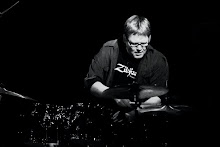
Thursday, April 14, 2022

Cymbal Assessment

 Hey all,

I've mentioned this before, but one of the silver linings to the dark cloud of things being shut down is the chance to assess elements of one's sound. Inspired by Paul Motian's list of cymbals that made the rounds, I decided to do an inventory of all the cymbals I own. 8 rides, 3 splashes, 5 crashes, 1 China type and 3 sets of hi-hats. For someone who has been playing for over 40 years, that's not really that much. Then I started recording myself and playing various combinations of of my collection.I won't post most of the videos because they do go on, but I have been making notes and will share them here. Hopefully, my insights into the qualities and interactions of my various metal friends will inspire you to assess your sound as well. 

I will  be grouping my cymbals by categories such as Best at playing with others (blend, in other words), Most similar Sounding, Darkest, Lightest, Trashiest, This Needs to Go, Loudest, Quietest, Hardest to Control, and anything else I can think of…..should be fun! 


The results:

Well, first of all, I should say that after 3 or 4 days of cymbals comparisons, my ears were getting fatigued.  I remember checking out cymbals at the Zildjian factory some time ago, and after about an hour it was like, "Um, that sounds like a cymbal, and so does that!"

Most Bull in the proverbial "China" Shop

This was easy. My 16" Zildjian Oriental Trash doesn't sound like anything else I own. Because I tend to view China-type cymbals as crashes (like DeJohnette) rather than rides ( like Mel Lewis), the trash cymbal is thin fast, and nasty! The ironic thing is, because the sound of this pie is so specific, it actually works wonderfully with all the other cymbals because it's always a great contrast! Whenever I get a bit burnt out on this sound, I put it away and when I come back to it, it sounds fresh again!

Most Same-y Same-y ( Or, "Why do you have two of these?)

There were a few of these. My 12"  A Zildjian splash and my Dad's old A Zildjian Hi-Hat (which is actually 11", my mistake earlier) sound close enough in pitch that I wouldn't ever use them both at the same time, so if I get some sort of Manu Katche tribute band together, I'll only have 2 splashes available! :) I will use the newer 12" and keep the 11" mainly for historical and sentimental value. I also have an 8" Zildjian splash that does sound quite different than the other ones…...

Also the two 16" crashes' pitches are very close. I will use them both for slightly different things however, as the A Zildjian ( the first "Good" cymbal I ever bought myself!) is better for high volume situations. The K Constantinople crash seems to "max out" after things get loud, and I have found this true with all the newer Ks I've tried.

Phew!  Is anybody (besides my Mom) still reading this?……………….

Least interesting cymbal

My 2002 Paiste 20". Now, that isn't to say it isn't a good cymbal. In fact, if I had the dough and played a lot more Pop and Rock I would love to have a whole set of these. They record well too! ( Lot of highs and low, and not so much mid-range.) So, what's the issue?  Well, it doesn't have a ton of character, IMO. Sometimes the things that make a cymbal challenging to play, are also what make it interesting. Anyway, it is a nice clean sounding cymbal, and I'm glad I have it.

Most interesting cymbal

Probably the old K (20")  I've had since high school. It's very thin and therefore it took me a long time to learn how to play it without washing out. I traded it for a 20" A Zildjian mini-cup ride which Ive NEVER regretted getting rid of.  The mini-cup is again, a good quality cymbal, but it seemed to combine the worst elements of a flat ride and a regular cymbal, without any of the benefits of either!

Is there a cymbal I still want?

Speaking of flat rides! I'm still looking for one. I had an A. Zildjian flat ride for awhile but it was too bright. I like most of the Jazz drummers in the GTA, borrowed Don Thompson's Paiste 602 flat ride. ( The "Now He Sings, Now He Sobs" cymbal. ) I LOVE the 602s, but getting them to blend and harmonize with any other cymbals I find very difficult. I'm still looking though. I borrowed Kieran Overs' 20" K Flat ride ( Where would we drummers be without borrowing other instrumentalist's cymbals?) and that was pretty close. If I can find one for a decent price I'd probably grab it. (UPDATE: I bought a 20" K Zildjian light flat ride that I am really enjoying.)

Most Whacky Overtones

Oddly enough, the 3 Old Ks I use were beaten out by my 22 A Zildjian from the 70s. (Mids for days), and the 19" K. Dark Crash (2000s) , that, despite being quite a low pitched cymbal, has a strange kind of brittle brightness that I've  never quite gotten used to. It seems to have mellowed a bit, however, so maybe it just needs more time.

Hi-hats, not so catchy-matchy

Of the 3 sets I have, only the old Ks are actually a matched pair. (I absolutely LOVE these hats, and if I was only allowed on set of hi-hats, I would play these quite happily.) One is an old A. Zildjian bottom I'm using as a top cymbal and a Sabian (the only cymbal of this make I actually own) Flat Hat on the bottom. The other "set" of hi-hats is a newer K. Zildjian on top and a A. Armand Zildjian on the bottom.


Anyway, I would encourage everyone who has been amassing gear to go through it and access occasionally.

Happy trails! 


Happy trails! 

Monday, April 11, 2022

Ron Carter, Jim Hall Telepathy

This is a recording I had heard about for a long time, but I hadn't listened to.


 Full disclosure, I'm late to the party. BUT WHAT A PARTY IT IS!!!!! Everyone should listen to this. Why? Here's a just few reasons…

1. Hall's mastery of thematic soloing is only matched by masters like Sonny Rollins. JH never wastes an idea, or even a note. All musicians can learn from this.

2. The use of space by Carter and Hall is exquisite. Again, they never fill a space in the music superfluously.

3.  There is serious, deep, listening going on here.

4. The time feel is fantastic.

Speaking of time feel, this would be a great "drummer less" recording to play along with. It will work your dynamic range (try it with both brushes and sticks), sense of time, and most of all TASTE! :) 

Okay, now go get playing/listening!!! :)  

Monday, April 4, 2022

Transcribing and dependent coordination

 When I was in high school, I read an interview with Wynton Marsalis where he said something like, "When you transcribe, you're learning to read a solo more than play it". Now, because I was young, inexperienced, and prone to black and white thinking, this formed my attitude about transcriptions for the next 40 years!

Cue recently, when a pianist/composer friend of mine asked me to transcribe some timekeeping on the drum set for an arrangement she was writing. It happened to be the first chorus of this:


Of course, I love Mickey Roker, especially his playing on this track, but I hadn't listed to his playing on it in detail. This is where transcribing led me to some conclusions that I wouldn't have made UNLESS I was listening to it multiple times in a row AND was able to look at it! Hence, the advantage of transcribing. :) I might post it here at some point, but I actually believe the actual act of transcribing is where the transcribee learns the most. Case in point, Roker plays a lot of ride rhythm without the skip beat. He certainly doesn't play just quarter notes on his cymbal, but he is judicious about where he plays the +s in the rhythm, using it to decorate rather than dominate. This led me to realize that a lot of my work on independent coordination had become somewhat of a trap. When one works on something a lot, the opposite thing gets increasingly more challenging. For example, try playing the standard ride rhythm  and sometimes DON'T play the cymbal on 2 & 4. Conceptually easy, but there's a lot of muscle memory to get past! :) So, I started working on some "dependent coordination" ideas. I didn't write them out because these will work on any beats you know well.

Take any standard beat and….

1) Never allow a quadruple stop. (4 limbs playing at the same time).

2) " " " a triple stop. (3 limbs).

3) " " " Double stop. (2. At this point, you have become a saxophone player!)

Mix and match which limbs/parts of the kit become "immutable" and will always sound when you're making a choice of which combinations to play and what to leave out.
There are tons of examples of this we already play. For instance, in the Charlie Watts beat, the snare/LH on 2 & 4 is more important than the hi-hat/RH, hence the snare alone on those beats.

Have fun and experiment with it. I guarantee it'll kick your butt a bit and get you thinking about why you orchestrate things the way you do. :) 


Monday, March 28, 2022

Joe Henderson Quartet 1994

Programming Note: Well it's definitely Monday. :( Seems I can't post this on the blog, but please use below as a link to watch this incredible footage. I promise it'll be worth it!  

Wow! This is a great set from one of Joe Henderson's great working bands with Al Foster, George Mraz, and Bheki Mseleku. Al Foster is such a great example of someone who really found his own voice. It's also worth noting how "common" all the tunes they play are, and how often they (especially Joe) played them. Just goes to show that's it's not the tune, but the person playing it! Enjoy.


Monday, March 21, 2022

Paradiddle Madness!

 I have spent a LOT of time over the years working on Paradiddles and Paradiddle Inversions. What I haven't spent as much time on, is Double and Triple Paradiddles.

So, quick review.

Double Paradiddles are RLRLRR LRLRLL so if we want to play them in a very "consonant" and non-over the bar way, they work great as triplets or in 3/4.

Triple Paradiddles are RLRLRLRR LRLRLRLL (although we could certainly start both of these rudiments on the left hand as well.) This sticking adds up to a bar of 4/4 on each side of it, so that works quite well to start with.

Here are a few ways I used these rudiments. Most of them voiced around the drum set and quite a few of them going over the bar. Note I didn't film most of these or even write them out, but you will benefit from filling in the blanks on these yourself, as well as coming up with your own ideas.

1. Triple in 8th notes in 3/4

2. Triple in triplets in 4/4 and 3/4 (add whatever foot patterns feel represent these time signatures).

3. Doubles in 8th notes in 4/4.

4. Doubles and Triples in 8th notes in 4/4 w/ dotted 8th notes in bass drum.

5. "         ""           in hi-hat. ( BD plays quarters)

6. 4-5 in Triplets

7. 4-6 in 3/4 time.

8. 4-7 with 7 beat on again/off again BD pattern.

So, as usual, there's tons of work to do.

We can also play with putting in accents that don't naturally go with the stickings. Try playing double paradiddles in 8th notes in 4/4 but only accent in half notes. Or here's a fun one. This is a Triple Paradiddle w/LH on snare and RH on hi-hat with dotted quarter accents and a 2-beat feel in the feet. It has a sort of relentless feel that I like, and seems to get more powerful the quieter I play it. As always, play for the music and be kind and gentle with yourself.


Monday, March 14, 2022

Thoughts on over the barline playing

 Basically, relate everything to the tune you're playing.

Here it is in more detail…..


Monday, March 7, 2022

Embracing matched grip

 I have mentioned before that I am exclusively a matched grip player. Except for a very brief period in my early 20s, I haven't even attempted to play traditional grip. When I experimented with conventional grip I realized that I would have to practice incredibly hard to even get it to a passible level, and I decided to focus on other things. I have nothing against anyone playing trad grip, or switching to it. It does drive me a little crazy however, when people try to associate a grip with a style of music. Lots of great Rock players play traditional, lots of wonderful Jazz players play matched. I wish that was the end of the discussion, but far from it!

Lots of trad players (especially American ones)  justify what they're doing as part of a legacy. I also think it's a way drummers demonstrate how much time they've spent with the instrument by learning the "harder' grip, and maybe playing matched as well. I've argued against these points until I'm blue in the face, so I won't bother to do it again. I will, however mention a few advantages that matched grip has that maybe don't get mentioned that much…….

1.) Matched grip is a much more "elemental" way of holding the sticks.

Yes, obviously it's easier to play louder but rather I'm talking about getting in touch with the first instinct someone has when they pick up the sticks. If someone has never seen someone play traditional grip, there's NO WAY they will grab the sticks in that fashion the first time they play. Even if they have seen someone play trad grip before, they invariably get it wrong. The first person to ever play drums with sticks played like Ringo, like it or not! To play matched is to be in touch with the primitive, non-intellectual, and emotional beginnings of the instrument!

2. One hand can "teach" the other.

Because both sticks are held the same way, if you do something you like with one hand, you can mimic it to learn it with the other. I recently realized I had a better way of choking cymbals with my RH, so I'm setting about teaching my LH to do the same…… (See video below.)


Once again, I think it's very important for me to stress I have nothing against traditional grip and the many great drummers who play that way. I just feel that lately, matched grip is being viewed in a somewhat limited way by the drumming cognoscente. What ever way you hold the sticks, play the crap out of the music! That's the important part! :)