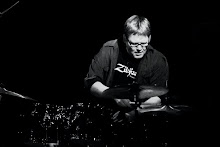
I'm especially struck by his comments on paying homage, and also his ideas on bigger hi-hats. I have to admit, I sometimes thought that was just a fad, but he makes a lot of sense.
Hmmmmm…. anybody got a set of 19" New Beats? :)
UPDATE: As this was about to be published, I got hipped to this footage of Jeff Porcaro in his prime tracking for a Steve Lukather album. Fantastic!!!!! He is so missed …..
I stumbled onto this great footage of Art Taylor playing with Dizzy, Johnny Griffin and Stan Getz playing Stella By Starlight in "71, so let's start with that…..
Great, right? It's so awesome to hear Art Taylor playing, and the great big sound he gets when he's comping but here's the thing, it's very easy in a swing situation to get obsessed with all the independent stuff and ignore our main voice in the situation. That would be the ride cymbal of course. Rewind to earlier today when Dan Weiss was talking on his instagram page about practicing only ride cymbal. I have done this as well, and I think if one is serious about getting their Jazz ride cymbal playing together, it's well worth doing.
As I was mentioning before, it's easy to get distracted by the other parts of the drum set. When we play ride cymbal alone, we're getting to the heart of the time. There is nowhere to hide, and no way to wow people into thinking the time is strong with a bunch of chops-based baloney! We also have to really feel the space between the ride cymbal notes. Check it out, it'll totally change your playing.
…And what i mean by practicing ride cymbal is to play just that instrument along to recordings and make it strong and groovy.
Right after i checked out the Dizzy vid, a Joe Henderson came up with Al Foster playing. Here it is. They are also playing "Stella"
Also great. Working on copying the ride feels of Air Taylor and Al Foster would be a great way to start to design one's ride feel. Enjoy and have fun!
Just letting everyone know I'm available to teach either via internet or in person ( with social distancing and with my trusty mask pictured below ) . Whether you're a novice, intermediate or professional drummer, I can help you reach your full potential. Contact me here or through twarren@gto.net.
As one continues through life as a musician, two general types of players tend to emerge. The first type tend to be constantly practicing, learning new ways of dealing with their instrument. I would say often this sort of player can get into things that aren't even completely useful in a musical setting, and that's one of the major pitfalls of this sort of approach.
The second type of player tends to either work towards some specific gig coming up ( a lot of classical musicians work this way ) or sort of keep loose on the gigs, and listen to music to "stay in the game". This is a valid approach, especially if someone has been playing for a long time, or one's style of playing doesn't necessarily require a lot of velocity, or both.
Although I have spent most of my life fitting into the first category, about 8 years ago I found myself really not having any desire to practice. At the time, I thought I had "graduated" to this approach due to the fact I had been playing a long time. I later discovered my lack of interest in practicing had been due to clinical depression and that my life was in a shambles. As soon as my personal life improved, my desire to explore the drums, and piano, and even harmonica, blossomed to a level it hadn't been to in years. This is even in spite of the fact that in my current living situation, having access to drums and acoustic piano is limited, but even this has had the paradoxical effect of making practice even more precious and fruitful! :)
Why am I going on about this? Well, in this time of extremely limited gig opportunities, I think we all have to think of ways to keep the music in our lives, even if we're not performing. So here are some ways to think about keeping supple and close to the music.
1. Practice new, and maybe esoteric and challenging things…..
If you are a "practising" type, by all means, keep at it! You can also, however, use this opportunity to practise things that don't normally come up on gigs, and therefore you're too busy to work on them. Don't get a chance to work on modulations and odd groupings with your country band? Now's the time, baby! 2. Check out music you normally don't listen to.
This is something that can apply to both types of players I've mentioned. if you're a metal drummer, check out some Nat Cole. If you play Jazz, check out some music from a far-away culture. etc. 3. Play-a-longs!
By this, I really mean, play along to recordings. This is the closest you can get to playing a gig without playing a gig and will help keep your instincts sharp, especially if it's improvised music. 4. Check out other forms of art and story telling.
Look at art online, read book, and watch movies and dance to get an idea how artists in those forms reach their audience. 5. Mental practice!
I won't go into detail on this because I've talked about it at length before. I will mention that for folks like me that have limited access to instruments, this can be a real aid to mental wellness and a positive outlook, as well as helping us feel fresh and loose.
In conclusion, I want to state that we can all view this "pause" on performing live as an opportunity. I'm not sure if I'll come out of this period necessarily a more financially successful musician, but I certainly will be a more sensitive and skilled one, as well as a better human being!
Finally, here's a short snare/cymbal solo I recorded in my apartment recently. :)
Greetings,
This is another sort of commercial, mainly for the many types of musical services I offer…
Online Lessons
I have gotten my technology together and I am offering lessons on Skype, FaceTime, Messenger, or any platform you prefer. $60 an hour. Times/days negotiable
Recording tracks
I have been recording for other people's projects, as well as a few things up my sleeve that I'll be announcing soon. Price negotiable.
Article/Book Editing
Want to get your drum-related work published? I can clean it up, make it clearer, and help you get noticed by major drum/music publications. $60 an hour.
Production
Send me your tracks, pre-production rehearsals, ideas to be arranged, etc. and I can help you make your recording the best it can be. Price negotiable.