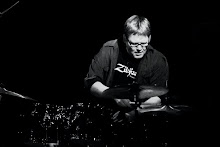
Quick post. I just realized that since the quarantine began, most days I have practiced at least an hour of piano and an hour of drums. So, just to be on the conservative side, say I practiced 5 days a week, and started in earnest by April. That means by now I will have practiced at least a 100 hours of each instrument. I'm not telling you this to brag or anything. In fact, there are many people who practice WAY more than this, as I have earlier in my career. My point is, I have seen a lot of improvement in my flexibility and comfort with both instruments as of late. I've said it before, but if you spend enough time with an instrument, it will start to whisper in your ear, telling you its secrets. The thing is, this is available to everyone! All you need to do is put in the time.
To say that we live in interesting times would be a vast understatement, even if we are looking at pre-pandemic. We musicians are aided by many modern inventions, from tuning apps, to electronic metronomes, to recording software we can use on a laptop or phone. For sure, we have gained much. But, have we ever given though to what we might be losing? A case in point is the history of the drum machine. In the early 80s, drum machines were developed as an aid to the recording process. Many drummers weren't happy about this, but some realized it could be an important tool. Many great recordings , especially in the Pop world, featured live drummer/machine hybrids that were very interesting. As we headed into the next decade, Drum n' Bass and Electronica used this machine in new and exciting ways. it's at this point something unprecedented happened. Drummers started imitating the machines rather than the other way around.
Now, this is not even remotely intended to denigrate the great things people like Jojo Mayer, Questlove, and others have done to take the best parts of drum machines and sequencers and add it to their musical palette. No, the problem is with the drummers that were influenced by these innovators. and as a result, we live in a world where "machine-like" precision and execution has become the gold standard. Super tight, clean, playing is seen as the only way to play. If Elvin Jones had started recording now, I'm afraid there would likely be a lot of talk about how "sloppy" he plays, rather than how swinging, expressive, and beautiful it is. You can see the problem, right? There can be a beautiful looseness to how many drummers operate, especially when playing swing. I actually had a person tell me when he saw Lewis Nash for the first time how "tidy" his playing was. Now, Mr. Nash has very formidable and clean technique when he wants to use it, but it seems to me that focusing on the speed or evenness of his hands when he's painting such beautiful musical pictures strikes me a weird thing to focus on. I've been checking out a lot of Billy Higgins lately, and I love the relaxed looseness and joy that he brings to everything he plays. Check this out and I'm sure you'll agree with me…..
In conclusion, I think it's important to remember that the reason nobody has successfully programmed a machine to sound like Elvin, Billy Higgins, Keith Moon, or many others is there is humanity and personality there that can't be copied. By all means, work on your "perfect' playing, but also be ready to go for it and be yourself! :)
I really wouldn't be surprised if anyone reading my blog thinks that I have a personal vendetta against Instagram. I don't. I just feel that the Instagram part of the social media neighbourhood has a lot of sensational qualities that can lead musicians, especially drummers, down the wrong path. Take this idea of "killer fill"-type posts I see constantly. I really feel, after one has been playing a couple of years, there is no point in differentiating between "time" and "fills".
I mean, if we're not keeping time while playing fills we've got a problem. Also, as soon as we're playing anything, including a patterned beat, we are filling up a sonic space in the music.
Another problematic element is the idea that somehow playing some sort of pattern or groove, especially a hypnotic, repeating one, is boring, and the "fills" are where we get to shine . I must admit when I was younger I too, suffered from this limited thinking. No wonder when I listen back to old recordings I hear that impatience and lack of maturity in the grooves I was attempting to play. If all I was thinking about while I was keeping time was about how I was going to dazzle everyone when I played a fill, I wasn't truly in the present, where most great music lives.
Yes, I admit there are times in the music where it makes sense to stay on one area of the drum set and play something solid that doesn't change constantly. ( Philly Joe on "Milestones', anyone? ) Then there are times when the music requests the excitement that moving around the drums and cymbals creates.
Some music requires no fills, some music requires so much moving around the instrument that one can't tell where the "time" stops and the "fills" start. In short, figure out what the music needs and judge yourself accordingly.
As a great example of someone to appears not to be worried and/or making value judgments about the dreaded time and fills, I give you the wonderful Paul DeLong. Yes, sometimes he spends more time on the toms and other locations in the music he's focused on the hi-hat, but MOST IMPORTANTLY, he's always playing and representing the flow of the music. Beautiful. See you soon.
One of the current ideas that's floating around in this time of Covid/Lockdown is creating challenges online.. You know, for 1 month I'll only cook with tofu/exercise an hour a day/stop watching reality shows etc. But in our daily practice sessions, we can challenge ourselves in more practical ways, no matter what it is we're working on…..
1. Change the tempo
Whatever you're working on, play it after several different tempos, especially slow ones. That's where you'll find out if you really have something together or not…..
2. Change the dynamic
A very similar concept to #1, but now we're working on varying the volume of what we're working on, and not just playing it FF and then pp, but utilizing crescendos and decrescendos too!
3. Change the articulation
Okay, so now you can play the lick faster or slower and louder or softer, but how about the whole thing as dead strokes? Doubles? Buzzes? Or combinations of the aforementioned and the original idea? This will really kick your behind, believe me!
So, as we can see, there are many ways to vary any idea we're practicing to learn it in a more complete way. One of the other benefits of this is, the idea we've been practicing becomes much more available to us in a playing situation if it doesn't rely on a specific tempo, dynamic, or articulation. We can even revisit old ideas and breathe new life into them by practicing this way.
Have fun and good luck!
hey all,
I stumbled onto this great footage of Simon Phillips the other day. For me, he's my favourite of the post Cobham open handed drummers. I always get the feeling from him that he's using his impressive technique to serve a higher musical purpose and this well-constructed solo is no exception. Enjoy.
Wow! he even played the hi-hat with his RIGHT hand for a second there…… :)
Well , the youtube title describes it accurately, if not that artfully. This is a 3/.4 version of one of the fast brush patterns found in John Riley's Art of Bop Drumming book. I like it because the movement of both hands alternating a left to right line across the drum for me was a new one, and so much of brush playing is getting comfortable with new movements. Funnily enough, I never found the 4/4 version worked so great on fast tempos for me, but I use it a lot with medium grooves. I play the pattern first with the skip beat on the + of one, and then with the + of 3, with a couple of variations thrown in at the end for good measure. Enjoy!