Hello,
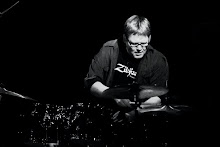
Just posting some recent footage of Avi Granite's band at the Yardbird Suite in Edmonton. I always love playing at The Suite and I think this captures the essence of the band very well. The irony of this showing up now is that I was recently in a situation where someone wanted footage of me and it was hard to find the combination of something that was recent, showed me clearly, and looked AND sounded good… Oh well! :)
Friday, February 21, 2020

Sunday, February 16, 2020
Happy 10th and Rumours ( Not Fleetwood Mac Though! )
NOTE: I have kept the earlier post I posted then removed intact. As far as I can tell, Jon Christensen is still among us. I heard a rumour he is currently unable to play, but, well, rumours are what got me in this situation to begin with! I do have some footage of him playing in 2018 (see below) and he certainly sounds great in it! Whatever his current state is we wish him joy, health and happiness…..
Happy 10th Anniversary to us!
It's hard to believe I began this blog a decade ago. I have been through massive changes in my playing, teaching, and life and I suspect things will continue to evolve. I appreciate all of you who have been on any part of this journey for me. Thanks so much!
As I mentioned at the beginning of this post, a rumour got started that the great European drummer Jon Christensen had died. This thankfully turned out to be untrue and I thought I would use this opportunity to celebrate Mr. Christensen's contributions to music! Here's some of the latest footage I found of him, for only 2 years ago, he certainly looks and sounds great here!
I woke up to today to the news that, as well as great celebrated keyboard Lyle Mays leaving us, that great European drummer Jon Christensen has died. ( This news about Christensen has now been proven false.) This hits very hard for me. Christensen was a massive influence, first with Keith Jarret's European Quartet, but also with the many recordings he made for Manfred Eicher's label. For me, he and DeJohnette epitomized the ECM drum sound and approach, and because Christensen did in a less obviously virtuosic way, it was easier for me to get into as a young player. On one particular Bobo Stenson recording I had on cassette, I remember thinking his drums sounded like a rainstorm, but the drops of water were hitting the drums in the most beautiful way. Playing grooves or completely free, he could do it all and always sounded wonderful.
Here's some early footage of him playing with Sonny Rollins….
And here's him playing with the celebrated Jarrett quartet……
Thanks for the music Mr. Christensen, you won't be forgotten.
Wednesday, February 12, 2020
Teachers and Teaching
Thanks goes to my great friend and musician, David Restivo, for hipping me to this great Bernstein doc., focusing on his teachers and teaching.
Some of my takeaways?
We are all students and all teachers.
Strong personalities in music giving you seemingly opposite messages is good, and we need to reconcile them and work them out.
Intent is everything.
Be honest with your fellow musicians and students ALWAYS.
But, as all things in music, check out yourself and come to your own conclusions. That's an hour very well spent.
Saturday, February 8, 2020
Working on audience chops
A very old joke goes, Q: How many drummers doers it take to screw in a light bulb? A: One, but there are another 20 hanging around thinking about how they could do it better.
I'm afraid I used to be very guilty of this sort of thinking. One of the many problems with this attitude is it leads to not hearing how the drums work with the music in it's entirety, just what the drums are doing, and if it's sufficiently mind blowing in a technical, chops-based way. We also don't appreciate the unique qualities the particular drummer with a group is bringing to the music. They are not doing what we would do? GOOD! We're not up there, that particular drummer is! Could it be they have a very different conception than ours, and we're just not "getting it"? I saw Peter LaRoca play years ago, and didn't like it very much. After checking him out a lot on recordings some years later, I realized that when I had seen him live, my ears were not advanced enough at the time to fully understand what he was doing.
Yes, sometimes we will hear musicians that probably need more experience and craft, but even in that case, let's try to focus on what IS working. If something isn't working, let's try to discern if it's something that's occurring in our own playing, or how we as teachers would address that issue. We can be creative with our listening too.
The other thing with being in an audience and being really judgmental is that it's something coming from our egos, and spreads negative energy. When I'm in an audience now, I'm am listening because I love music, and try to be just as dedicated a listener as I am a performer. I try to focus on what's happening onstage, how I can learn from it, and how it affects me emotionally. There are just as many lessons from actively witnessing and listening to a performance as there are from playing somewhere.
To close out, here's two contrasting but great performances. The first is Pete LaRoca playing with Jackie McLean on McLean's "Minor Apprehension " . I was fascinated to find out from Scott K. Fish's Blog that this is the first "free" drum solo on record! Enjoy…
And here's something equally great. I got a chance to see William Prince play two tunes at a variety show last night and was totally blown away. He has such a beautiful warm voice, writes beautiful songs, has a great, honest stage presence, and his band is killing! Check out the title tune from his new recording, "Reliever".
Sunday, February 2, 2020
Combining ideas
Howdy,
Today I'd like to discuss taking 2 or more different ideas and combining them in the practice room. For sure, it's essential not to work on too many things at once, especially when first learning a beat/idea/concept. Shortly after one starts to get it together, however, can be a great time to try and join seemingly disparate ideas together. This helps with thematic thinking as well as making each separate concept a bigger and more accessible part of one's musical vocabulary.
Let's try it shall we?
Say I've decided to memorize the standard tune "Alone Together" . Here's a nice example of the tune I haven't heard before.
It's not a super complicated tune, but the form is a little unusual AABA, but the first 2 As are 14 bars each. DO NOT TRY TO READ THIS OR COUNT BARS! Learn to sing the melody by heart ( find a vocal version with the lyrics too, if possible, and learn them as well ) and it will make perfect sense. If you don't, it will NEVER make any sense at all.
Okay, once we have the tune memorized, what's next? Well, how about taking a great, simple idea I just recently saw in the "Four on The Floor" blog, Triplets & Bass Drum in the Middle Because this example is short and uncomplicated ( at least in theory, execution is another matter ) it works well to be combined with something, because it can be easily memorized. Again, please work with each idea to get it under your hands and ears before you do anything else. Once you do, try singing "Alone Together" to yourself while you play this exercise. What do you notice? Did you not remember or not represent the tune accurately in any way? Then you need to go back and learn the tune more completely. Did you mess up the triplet/bass drum lick? Then maybe you need to spend more time working slowly on that alone and getting more comfortable with it.
Okay, we've got those two things together, what now? Well, we could really relate it to anything, but here's 2 things I've been adding to whatever I'm working on lately.
1) Dynamics. One bar pp, one bar FF. Again this is a simple idea, but to do it without changing the lick at all or losing where you are in the tune may be challenging.
2) Making the hand strokes in the bass drum/triplet idea into buzzes.
Obviously, you can combine any number of initially separate ideas in any way you can imagine. My hope is this helps you see the similarities between all the things we practice rather than the differences, so we can use them musically in a variety of situations.
Best of luck and have fun! :)
Thursday, January 30, 2020
The four Types of Musical get togethers
Warning: I'm not including either the Hootenanny or the ever popular Shindig!
Anyway, I was thinking about the different ways musicians gather, and what those gatherings are for. I came up with four basic types.
1. Rehearsal
In the settings I'm usually in, these are the parameters….
It's usually to run the heads (melodies of tunes) and the blowing chord changes if they're hard or unusual. For example, if I've written a rather complex melody with weird changes but the blowing is a straight blues in Bb, I would not have people solo extensively on it. That's just wasting other musicians valuable time. I also would NOT run something in a rehearsal that I'm not comfortable with, but that rest of the band can play easily. It's my responsibility to take care of my part of the music. Nothing is more irritating than going to a rehearsal and realizing you are just there to make the leader comfortable, That's not a valid reason to rehearse. ( Note: I'm not talking about Broadway shows or big Rock productions that have lighting cues, dancers, etc. That is a different story. I'm also basing this off of the fact that I rarely get paid to rehearse. If you aren't going to pay the rest of the musicians, the rehearsal has to be efficient and essential. )
2. Session
This is similar to a rehearsal, but it's not usually for an upcoming gig, but to workshop things people want to work on. It could involve original music, or standards or jazz tunes people want to practice soloing on. Like rehearsing, there is rarely an audience in attendance, and also like rehearsing, each individual is expected to work on the material on their own so something can get accomplished when the session takes place. For instance, I play piano/bass duos with a friend in Guelph regularly, and we just play (non-original) tunes but I always work on the tunes we're going to play beforehand because I don't feel I could bring much to the situation if I was reading a tune I'm unfamiliar with ( on drums this wouldn't be a problem.)
3, Jam
This is the first situation that frequently can have an audience. In fact, I have sat in with a couple of "Jam bands" and really enjoyed the experience. In a jam there often isn't a particular tune being played ( although there can be ). Rather it's usually more of an "open form" or "free" situation although there often is a tempo, groove, key centre, and tonality people tend to agree on. What makes this situation work is how much listening is going on. If people are really tuned in to what everyone is doing, a composition can be built in the moment by committee, and it's pretty cool to be involved in!
4. Wank
For those of you not familiar with the term, wanking is British slang for, ahem, "self-pleasuring". This term is applied to music when you have individuals playing that aren't really listening to anyone but themselves, and haven't really put in the time on an instrument to play it effectively in a group setting. In fact, most of the time people in this situation aren't listening because they are too busy grappling with an instrument they don't know the basics of. ( I.E. The fretboard on a guitar, sticking and time playing at different tempos on drums, fingerings on the saxophone etc. ) Wanking usually happens most with less experienced players, although I would put "noodling' as a sub-category to this, and that's often done by intermediate to pro players. Noodling is exactly what it sounds like, playing in between tunes which is usually practicing they should have done on their own before the band got together. I'm making it sound like there is no purpose to the wank, but it can be good for getting beginner players to experience some sort of group dynamic, or to blow off steam. For anyone with any amount of experience though, wanking is VERBOTEN!!!!
So. in conclusion, be an efficient rehearser, a prepared sessioner, a tasteful and listening jammer, and not a wanker! You don't want Spinal Tap to say this about you!
See ya soon……..
Saturday, January 11, 2020
2020/Goodbye Neil
Hello all,
We start the first blog of the new year with the sad news of Neil Peart's passing. Peart was a massive influence on myself and so many of my colleagues, especially the Canadian ones. For most of us, he was our first drumming influence, and like many early heroes, our relationship ebbs and flows over time. He wasn't the grooviest drummer of all time, all his parts were planned out far in advance, and I feel those Buddy Rich tribute recordings he was in charge of caused even more misunderstanding of Buddy's contribution than there was previously. That said, he advanced drumming, created many classic lyrics, proved one could be an extremely successful musician while having a good relationship with one's family and bandmates, and played the music he thought it should be played. He was a beacon to many young drummers ( especially Canadian ones ) and was an example to all of us of how to conduct oneself with honour and integrity.
I'm not afraid to admit I learned to play Ska from playing along with this recording. As Canadian a cultural experience as hockey, or the maple leaf itself.
I think it's also important to note that whatever your opinion of Rush is ( and I remain a massive fan ) is that Peart and his bandmates made you want to play better, play more interesting, challenging arrangements and not compromise on your vision.
Safe journey Professor and thank you for the music and inspiration.
Subscribe to:
Posts (Atom)